

Introduction: A WPC door handles humid indoor air through a closed PVC face and a composite core that does not take on water the way open wood grain does.
Anyone comparing door materials for a humid room runs into the same tangle of words: moisture resistant, water resistant, waterproof, indoor rated. They sound like points on one scale, and shoppers often treat them that way, assuming a door sold for humid rooms can go anywhere a wet door goes. The material itself tells a clearer story. WPC behaves well in humid indoor air for specific structural reasons, and the same structure sets a firm edge on where the door belongs. Understanding that mechanism makes the label easier to read and the choice much less risky.
How moisture moves through wood-based doors and composite doors
Wood is hygroscopic, which means it exchanges water vapor with the air around it. In a natural timber leaf or a wood-core door, the grain opens at the top and bottom rails and along every machined edge. Vapor travels those paths into the cell walls, the leaf takes on moisture, it swells slightly across its width, and it gives that moisture back when the air dries. A veneer or laminate face slows the process across the flat surface, yet edges, lock cutouts and hinge mortises still connect the core to the room. Over a long humid season the visible result is a door that binds in its frame, drops at the latch side, or develops a rough, raised edge. None of that is a manufacturing fault; it is wood responding to air.
A composite leaf changes the pathway rather than the weather. Solid WPC is wood fiber and plastic pressed into a full-thickness leaf, with the polymer matrix wrapped around the fiber. Water vapor arriving at the surface meets a plastic-rich body instead of open cell walls, so uptake is slow and small, and the leaf returns to its original dimensions as the room dries.
That is the physical basis for the moisture-resistant interior door label: reduced movement, not immunity. A WPC interior door manufacturer will still write indoor use on the specification, because the material is tuned for room air rather than for standing water.
The difference also shows up in routine maintenance, which is where most people actually meet it. In a humid apartment hallway after weeks of wet weather, the PVC face of a composite door wipes dry in one pass and the edge stays square, while a wood-based leaf in the same corridor feels slightly rough along the top rail and needs a nudge to close.
In a hotel guest room where the air conditioning runs only part of the day, the same pattern repeats season after season. That is a maintenance observation rather than a lab result, but it is the one facility staff notice first.
Where WPC Interior Doors Work in Humid Indoor Rooms
Rooms with heavy air moisture but no standing water are exactly the setting this material was built for: apartment corridors, hotel guest rooms, rental units, office suites, and the dry side of a bathroom. Three properties do most of the work in those rooms.
A closed PVC surface. The vinyl face is a continuous film rather than an open wood grain, so condensation, hand marks and cleaning spray sit on top of it instead of soaking in. Rigid PVC is a low-maintenance material that tolerates ordinary wiping, which is why a damp cloth usually covers the whole routine.
A core that does not absorb like wood. Because the WPC runs through the full leaf thickness, there is no separate wood core waiting to swell at the lock block or the bottom rail. The leaf stays flat and the gap between leaf and frame stays consistent through a humid season.
Air movement through the room. A door only stays dry if the room does. Moving air carries moisture away from faces and edges, while a leaf tucked behind furniture or flat against a wall with no gap stays damp longer. Ventilation does more for a door than any single material choice.
Those three together explain why WPC door sets appear in humidity-heavy projects. The frame is cut from the same composite family, so leaf and frame respond to moisture in the same way instead of pulling against each other. A custom WPC interior door made to a particular opening and wall thickness behaves the same way, since the mechanism does not change with size. The material asks for a normal indoor room with some air exchange, not a sealed box and not a wet zone.
Where High Humidity Still Rules Out a WPC Door
Shower enclosures are a different problem from humid air. A shower door takes direct spray on the inner face, running water down its edges, and standing water where the leaf meets the threshold or the seal. An interior composite leaf is built for room air, and a wet zone also needs drainage, seals and hardware that interior sets do not carry.
The humid air left in the bathroom after a shower is comfortable territory; water landing on the door for minutes at a time, several times a day, is not the condition the material was designed around. That is why a moisture-resistant door stays outside the shower enclosure even in an otherwise steamy bathroom.
Continuous water exposure widens the same point. Utility corners with hoses, laundry areas with regular splashing, floor washing that soaks a bottom rail, or a slow leak that keeps one face wet for days all push the door past indoor humidity. Occasional splashes in a dry area wipe up easily and belong to normal use.
Sustained wetting changes the load on the material, the joints and the frame, and it is where the indoor claim ends. Specification writing from any WPC door manufacturer tends to state this plainly: indoor use, not wet-area use.
Exterior openings are a third and separate condition. An exterior door handles driven rain, ultraviolet light and wide temperature swings, and it needs weather seals, sloped thresholds and drainage that an interior set never carries. A PVC veneer and composite leaf intended for indoor rooms loses finish and color under direct sun, and wind-driven rain reaches joints that indoor humidity never touches.
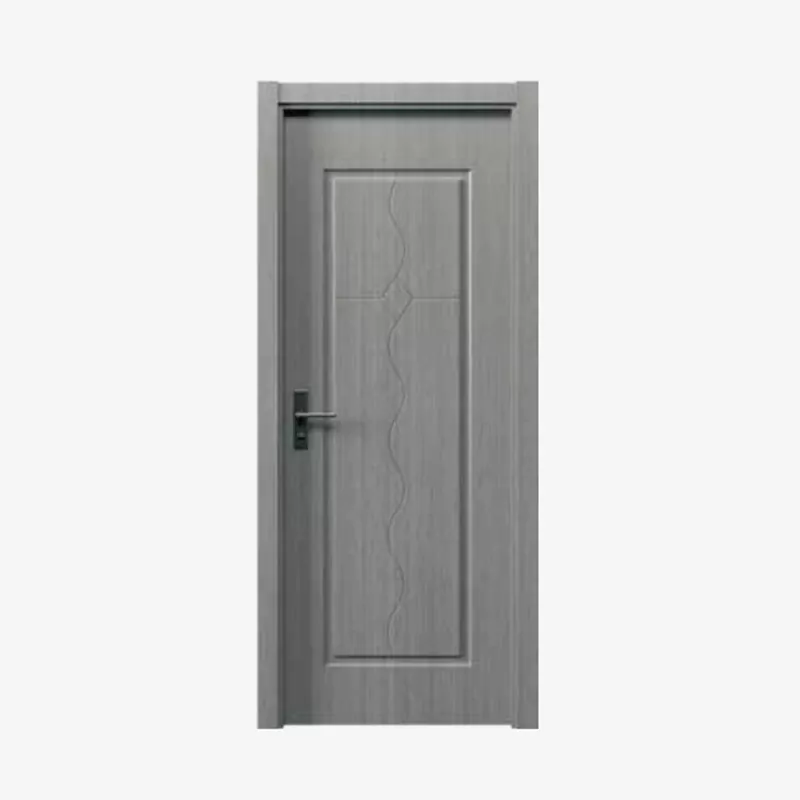
The Winzone 8304 WPC interior door is a useful example: a solid WPC composite leaf with a closed PVC veneer, made for indoor rooms. It manages humid indoor air well and has no place in an exterior opening.
Conclusion
Humidity tolerance in a WPC door comes down to structure rather than a coating or a promise. A full-thickness composite core slows vapor uptake, a closed PVC face keeps surface moisture where it can be wiped away, and room ventilation finishes the job. That combination covers humid indoor rooms and the odd splash in a dry area comfortably. It does not extend to shower enclosures, sustained wetting or exterior openings, which are separate conditions with separate requirements. A WPC door supplier that states indoor use plainly is giving useful information, not hiding a weakness — it is telling you the material is tuned for humid rooms and honest about where those rooms end.
FAQ
Q: Why do WPC doors resist moisture better in humid indoor rooms?
A: The advantage sits in the construction. Solid WPC presses wood fiber and plastic into a full-thickness leaf, so the polymer matrix surrounds the fiber and slows vapor uptake at the surface. A closed PVC face adds a continuous film that keeps condensation and splashes on top of the door instead of inside it. The leaf therefore moves far less between wet and dry weeks than an open-grain wood door, which is what keeps it flat and closing properly in a humid room.
Q: Can a moisture-resistant WPC door be used in a shower enclosure?
A: No. A shower enclosure is a wet zone, not a humid room. It brings direct spray, water running down the edges and standing water at the threshold and seal, and it relies on drainage and seals that an interior door set does not include. A WPC door handles the steamy air in the room around the shower well, and it belongs outside the enclosure itself, along with every other interior door of this type.
Q: What surface care helps a WPC door in a humid room?
A: Keep it simple: wipe the PVC face with a damp cloth and mild household cleaner, then dry it, and avoid abrasive pads, strong solvents or sharp scrapers that dull the film. Leave an air gap so the door is not pressed flat against a wall, and keep some ventilation moving through the room during humid weeks. Check the top and bottom edges occasionally, since those are the places where a quick wipe does the most good.
Sources / References
Green Guides | Federal Trade Commission
Vinyl Sustainability & Advocacy | The Vinyl Institute